Flip Flops Fruit Snacks Summer Days Mom: A Designer's Review
When I first opened Flip Flops Fruit Snacks Summer Days Mom, I immediately felt that warm, easygoing energy that makes a summer design actually sellable. It is not trying too hard. It leans into the kind of casual nostalgia that brings a smile before you even stitch it out. The combination of flip flops and fruit snacks is playful without being childish, and the "Summer Days Mom" phrasing gives it just enough identity to feel personal. For an embroidery designer like me, that balance matters. A design can be technically perfect and still feel flat. This one has personality baked into the vector shapes, and you can tell it was built with real projects in mind.
The product sits in the Crafts category under Graphics, which makes sense because it arrives as a fully scalable vector file. That means you are not locked into one size or one application. The description notes that it is made with 100% vector shapes and is re-sizable, and that is exactly what I want to see before importing anything into embroidery software. No pixelation headaches, no jagged edges when you enlarge it for a tote bag or shrink it for a mug decal. The real question for me is always how that vector quality translates once it hits fabric and thread.
First Look: The Mood and Where It Fits
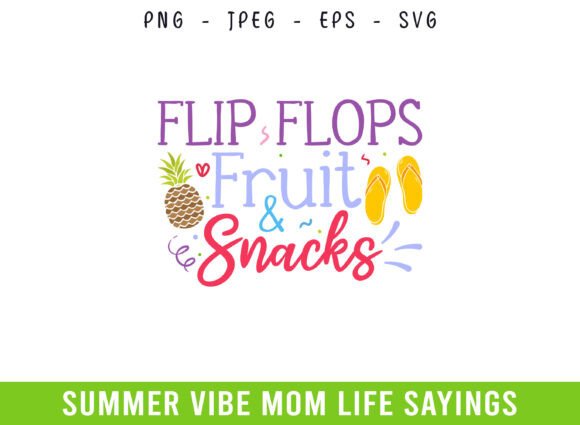
The visual mood of Flip Flops Fruit Snacks Summer Days Mom sits somewhere between a beach shop window and a cozy kitchen towel on a July morning. The flip flop silhouette grounds the design in summer, while the fruit snack element adds a hint of whimsy that parents and gift buyers notice right away. The "Mom" reference ties it to a specific audience without alienating anyone who just loves the season. I can see this working on a oversized sweatshirt for a mom friend, a beach tote, or even a set of matching aprons for a summer bake sale. The shape reads clearly even from a distance, which is a big deal when you are dealing with embroidery. If a design gets muddy at arm's length, it loses its power on a finished product.
What strikes me most is the easygoing confidence of the layout. It does not feel cluttered. The elements breathe. That breathing room translates directly into cleaner stitch paths and fewer headaches when you are digitizing or running a test stitch-out. Crowded designs with tiny gaps between shapes often turn into thread blobs on anything but the most stable fabric. This one looks like it was drawn by someone who understands that embroidery needs a little space to shine.
Real Project Thinking: The Summer Tote That Sold Out
Let me walk you through a real scenario I kept imagining while reviewing this design. Picture a small handmade shop owner preparing for a June craft fair. She has a stack of natural canvas tote bags, a fresh spool of coral thread, and exactly one afternoon to create samples that will actually move product. She loads Flip Flops Fruit Snacks Summer Days Mom into her machine, hoops the tote with a medium-weight cutaway stabilizer, and runs a test stitch. The flip flop outlines come through crisp. The fruit snack details are recognizable without being overworked. The lettering, if sized right, reads clearly. She makes three totes in different thread colors, posts them on her Instagram story, and sells all three before the fair even opens.
That is the kind of design this is. It is not a showpiece for a competition. It is a workhorse graphic that makes customers stop, smile, and reach for their wallet. For Etsy sellers and boutique owners, that reaction is gold. The design feels like something a customer would buy as a gift for a friend, a sister, or themselves. That giftability factor is huge, especially in the summer market when people are shopping for teacher appreciation presents, hostess gifts, and vacation send-offs.
How It Performs Across Different Fabric Types
I always evaluate a design based on where it will actually be stitched, not just how it looks on screen. Flip Flops Fruit Snacks Summer Days Mom has a versatile silhouette that adapts well to a range of fabric surfaces. On a sturdy cotton tote bag, the design holds its shape beautifully. On a mid-weight sweatshirt, the softer texture adds a cozy dimension that actually enhances the summer vibe rather than clashing with it. On a tea towel or kitchen linen, the design feels right at home, especially if you choose thread colors that complement natural linen tones.
That said, I would use caution on highly textured fabrics like terry cloth or thick fleece. The finer details within the fruit snack shapes could get swallowed by the fabric pile. On stretchy fabrics like performance tees or thin jersey, a good stabilizer becomes non-negotiable. The design has enough internal structure to resist distortion, but only if the fabric underneath is properly supported. I always recommend a test stitch on a fabric scrap that matches your final product. A design that looks flawless on woven cotton can shift dramatically on a stretchy blank.
Color Swapping and the Dark vs Light Fabric Question
One of the standout features mentioned in the product description is the ability to easily change colors for dark t-shirts, white t-shirts, or mugs. That flexibility is not just a nice bonus. It is a practical necessity for anyone running a craft business. A design that only works on light backgrounds cuts your product options in half. Flip Flops Fruit Snacks Summer Days Mom was clearly built with this in mind. The vector shapes are clean enough that you can invert colors, swap palettes, or match thread to your blank without losing the design's integrity.
On a dark shirt, I would lean toward bright, saturated thread colors that pop against the background. Think coral, turquoise, sunny yellow, or crisp white. On a white or light gray tee, softer pastels or muted tones can create a completely different vibe, more subtle and boutique-like. The same design can shift from bold and playful to soft and elegant just by changing the thread palette. That kind of versatility means you can market the same embroidery file to different customer segments without redesigning anything.
Small Details, Hoop Sizes, and Stitch Realities
Any time a design includes smaller decorative elements, and the fruit snacks in this piece definitely qualify, I pay close attention to how those details will actually stitch. Tiny shapes can turn into dense, bullet-like satin stitches if the design is not digitized thoughtfully. Since this product is delivered as a vector graphic rather than a pre-digitized embroidery file, the responsibility falls on you to handle the digitizing stage carefully. I recommend reviewing the small fruit snack details at your intended stitch size before committing to a full run. What looks charming at four inches wide might become a confusing cluster of thread at two inches.
Hoop size is another practical checkpoint. The description does not specify exact dimensions, so you will need to measure the design after scaling it to your preferred size. For a standard tote bag or sweatshirt chest placement, I would aim for a finished design width of around four to six inches. That gives the flip flops and lettering enough room to breathe while keeping the fruit snack details legible. For a patch or a cap, you would scale down, but I would not go below three inches wide without simplifying the internal details. Caps are especially tricky because the curved surface can pull at the design edges. If you are planning to stitch this on a hat, test it on a similarly curved scrap first.
What Buyers and Gift Recipients Actually Notice
Over the years, I have learned that customers notice different things than designers do. A designer might obsess over stitch density and underlay. A customer sees the whole picture. They notice whether the design makes them feel something. Flip Flops Fruit Snacks Summer Days Mom triggers a specific emotional response: the memory of warm sand, sticky fruit snack fingers, and the easy laughter of a summer afternoon with kids. That is what sells. That is what makes someone click "add to cart" on a custom embroidered tote or a personalized apron.
The "Mom" element is particularly effective for the gift market. A customer shopping for Mother's Day, a birthday, or just a thinking-of-you present will gravitate toward designs that feel personal without being overly specific. This design strikes that note perfectly. It is celebratory without being cheesy, and it carries enough universal summer appeal that it works even for people who are not moms but love the beachy aesthetic.
Commercial Use and Small Business Practicality
If you are selling finished embroidered products, whether on Etsy, at craft fairs, or through your own website, you need designs that are reliable. Flip Flops Fruit Snacks Summer Days Mom ticks the boxes that matter for commercial work. The vector base means you can scale it across multiple product types without quality loss. The theme is seasonal but not so narrow that it only sells in June and July. I can see this moving well from late spring through early fall, and even as a winter gift for someone dreaming of warmer weather.
Before listing products with this design, confirm the licensing terms. The description does not spell out commercial use rights in detail, so do your due diligence. Check whether the license allows you to sell finished physical products, digital mockups, or printed transfers. Most graphic assets in the Crafts space are intended for small business use, but you never want to assume. A quick check protects your shop from issues down the road.
Practical Stitch-Out Advice Before You Commit
Here is my honest, no-nonsense checklist for anyone planning to stitch Flip Flops Fruit Snacks Summer Days Mom on a real product:
- Test on scrap fabric first. Always. Even if you have used similar designs before, fabric behaves differently from one batch to the next.
- Check thread color contrast. Hold the spool against your fabric in natural light. What looks good under your craft lamp might look washed out in daylight.
- Review stitch density during digitizing. The fruit snack areas can become dense if you are not careful. Adjust fill stitch spacing to keep the fabric from puckering.
- Confirm your hoop size. Measure the scaled design and make sure it fits comfortably within your hoop, with at least a half-inch margin on all sides.
- Inspect small details at actual size. Print a paper mockup at the exact dimensions you plan to stitch and hold it against the product. If the details look cramped on paper, they will look cramped in thread.
- Test on both light and dark fabrics. Since the design supports color changes, run one test on a white blank and one on a dark blank to see how the thread palette shifts.
- Use the right stabilizer. For tote bags and sweatshirts, a medium cutaway stabilizer is your friend. For thinner fabrics, add a tear-away backing for extra support.
Final Thoughts for Makers and Shop Owners
Flip Flops Fruit Snacks Summer Days Mom earns its place in a working designer's library. It is not the flashiest design I have ever reviewed, but it is the kind of reliable, emotionally resonant graphic that quietly powers a successful product line. It understands its audience. It plays well with different fabric types and color palettes. It gives you enough creative flexibility to make it your own without requiring hours of tweaking.
For embroidery designers, small business owners, and crafters who want a summer-themed design that actually performs in the real world, this one is worth a serious look. Stitch it on a tote, a sweatshirt, a kitchen towel, or a patch. Change the colors to match your brand. Test it, refine it, and then let it do what good designs do: connect with customers and make your handmade products feel a little more joyful.