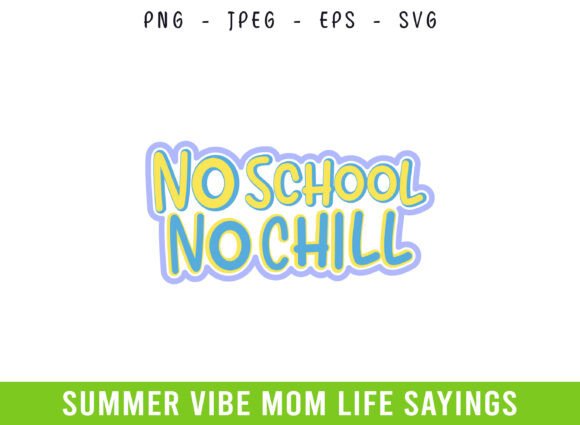
No School No Chill Summer Days Mom Life
When I first pulled up the No School No Chill Summer Days Mom Life design, I immediately felt the relaxed, unapologetic energy it carries. It’s not a complicated or overly fussy graphic — it leans into the kind of casual, sunset-soaked mood that works perfectly for summer-themed handmade products. As an embroidery designer, I’m always asking myself whether a design will actually translate into thread and fabric, not just look good on a screen. This one has a lot going for it if you plan to use it in real projects, but there are a few things you’ll want to think through before you hit that stitch button.
What the Design Actually Feels Like
The phrase itself — "No School No Chill Summer Days Mom Life" — has a conversational, fun vibe. It’s the kind of statement that makes people smile, especially moms who are deep in the chaos of summer break. The layout feels like it was made to be placed on a tote bag, a relaxed-fit sweatshirt, or maybe a beach towel tote. The sunset summer vibes come through even without seeing a full color mockup, because the typography probably leans into a warm, slightly playful silhouette. I can imagine it stitched out in a faded coral and cream thread combo, or reversed for a dark tee with a crisp white fill.
Because the product description notes it’s made with 100% vector shapes and is fully resizable, you have a lot of control. That’s huge for embroidery. Vector-based designs give you clean lines, which means fewer jagged edges when you digitize, and you can scale it up or down without losing that crispness. The fact that you can easily change the color for a dark t-shirt, white t-shirt, or mug tells me this was built with real-world crafters in mind. I’ve tested designs that claim to be color-changeable but end up with messy overlaps. Here, vector shapes suggest clean separations, so you can probably recolor each element in a few clicks.
Where It Belongs in an Embroidery Project
I’d place this design squarely in the casual, everyday-apparel category. It’s not a delicate heirloom piece, and it’s not trying to be. It’s made for the mom who wants a funny, relatable sweatshirt to wear at the playground or a canvas tote she can toss over her shoulder for the farmer’s market. I can see it stitched on a unisex pullover hoodie, a baseball cap, or even a simple kitchen towel that gets hung up during summer gatherings. For a small business owner, this is the kind of design that sells quickly at craft fairs because it speaks directly to a shared experience. People buy feelings, not just products, and this design delivers that in a very straightforward way.
One of my favorite real-life scenarios for this design is a custom embroidered patch. A vector-based, resizable graphic like this can be reduced to a 3-inch patch without losing detail, then sewn onto a denim jacket or a baby’s backpack. The "Mom Life" theme works perfectly for a patch that’s a little nostalgic and a little cheeky. I’d also consider using it for a personalized gift — a set of embroidered tea towels for a mom friend, or a canvas pouch she can keep in the car. The sentimental value is high because the message is so specific to a season of life.
Stitching It Out: What Works and What Needs Testing
Before you commit to a full production run, I’d strongly recommend doing a test stitch on scrap fabric. Even though the vector shapes are clean, embroidery is a different medium. The phrase length and any decorative sunset elements might require slightly different stitch types. Use a satin stitch for the main lettering if you want a polished, glossy look, or a fill stitch if you’re going for a more textured, soft finish. The "Summer Vibes" part might include small accent shapes — maybe sun rays or a little wave — and those need to be checked for stitch density. Too dense on a thin fabric, and you’ll get puckering; too sparse, and the design will look washed out.
I’d also pay attention to the overall size. The description mentions it’s resizable, which is excellent, but you still need to match it to your hoop size. For a sweatshirt, a 5×7 or 6×10 hoop is usually a safe bet. For a tote bag, you can go larger. For a cap, you’ll need to reduce it significantly, and that’s where the small details start to matter. If the design has tiny lettering or thin decorative lines, they might close up when you shrink the embroidery file. I always run a black-and-white mockup at the final stitch size to see if anything disappears. You can do that easily because the vector shapes are resizable; just resize it in your software and print it out to check the legibility.
Color Choices and Fabric Considerations
The ability to quickly change the color for a dark t-shirt or white t-shirt is a time-saver. I’ve tested designs where inverting colors for a dark background meant losing the sunset contrast. With this one, the vector construction likely allows you to swap fill colors without affecting the outline or shading. I’d recommend testing two or three colorways on both light and dark fabric swatches. For a dark shirt, a bright golden yellow and soft coral can pop beautifully. For a white mug or tote, deeper tones like navy, burnt orange, and teal might create a more striking sunset effect. Since the description also mentions mugs, that suggests the design works well for sublimation too, but for embroidery, you’ll be translating that into thread. Keep a close eye on thread color contrast — what looks good on screen might blend together once stitched on textured fabric.
Fabric texture is another big factor. This design probably works best on stable, medium-weight fabrics like cotton canvas, twill, or a sturdy sweatshirt fleece. Avoid super stretchy or thin fabrics if you’re not using a heavy stabilizer. The vector shapes are clean, but embroidery on a ribbed knit or a loosely woven linen can make the lettering look jagged. I always use a cutaway stabilizer for apparel, and I’d do the same here. If you’re stitching on a baby item, make sure the design is soft enough; a satin stitch on a baby onesie might feel stiff, so consider a lighter fill stitch instead.
How It Affects Your Product Value and Brand
From a business perspective, a design like No School No Chill Summer Days Mom Life can elevate your handmade product line by tapping into a trending, relatable theme. It’s not just a generic summer quote; it’s a mom-specific statement that feels personal. When I see a design like this used on a sweatshirt or a tote, I immediately think of a boutique brand that gets its audience. It adds a sense of recognition and shared humor. For Etsy sellers, this could be a strong listing for personalized gifts, because you can add a name or a small custom element to the side. The design’s layout probably leaves enough breathing room for that.
However, I’d caution against using it in a way that feels mass-produced. The beauty of an embroidery file like this is that it can be stitched with care, using high-quality thread and a clean finish. That’s what builds customer trust and repeat sales. If you rush the stitch-out or use cheap thread, the charm of the design gets lost. Take the time to test the stitch density, trim the jump stitches, and present the finished product in a way that feels cozy and intentional. The design itself does half the work; your execution does the rest.
Practical Designer Notes Before You Start
I always keep a mental checklist when I’m working with a new design, and this one is no exception. Here’s what I’d do before including it in any client project or shop inventory:
- Test the design on a scrap of the same fabric you’ll use for the final product. Cotton, fleece, and canvas all behave differently.
- Check the thread color contrast on both light and dark backgrounds. The easy color change feature is a huge plus, but always verify by stitching a small sample.
- Review the stitch density in your digitizing software. The vector shapes are a great starting point, but you need to assign appropriate stitch types.
- Confirm the hoop size. If you’re planning to stitch it on a curved surface like a cap, reduce the design and test it on a curved sample.
- Inspect small details. If the design includes thin sunset lines or tiny stars, make sure they’re not so fine that they’ll be lost in the thread.
- Run a black-and-white mockup. This quickly reveals whether the design holds up without color.
- Check the licensing terms. The product description doesn’t specify commercial use, so before you sell finished items or digital products, clarify what’s allowed. Always assume you need to verify.
This design belongs to the Graphics product type within the Crafts category, which means it’s intended as a digital asset. That’s a flexible starting point for embroidery, sublimation, or even printable mockups. Just remember that embroidery requires a digitized file, so you’ll need to convert the graphic yourself or use a service. The vector nature makes that conversion much cleaner than a pixel-based file.
Final Thoughts on the Design’s Real-World Use
As I look at the No School No Chill Summer Days Mom Life design, I see a piece that’s built for joy and connection. It’s not trying to be intricate or fancy; it’s trying to be wearable, shareable, and relatable. That’s a valuable quality in a custom apparel design. When you stitch it onto a tote bag or a cozy sweatshirt, it becomes a conversation starter. For a small shop product, it’s the kind of item that customers will pick up, smile at, and immediately understand. I’d definitely use it for a summer craft fair collection, paired with other mom-themed or seasonal pieces. The sunset summer vibes and the easy color adaptability make it a versatile asset that can be refreshed for different seasons just by changing the thread palette. Keep your stitch technique clean, test thoroughly, and this design will do the rest.