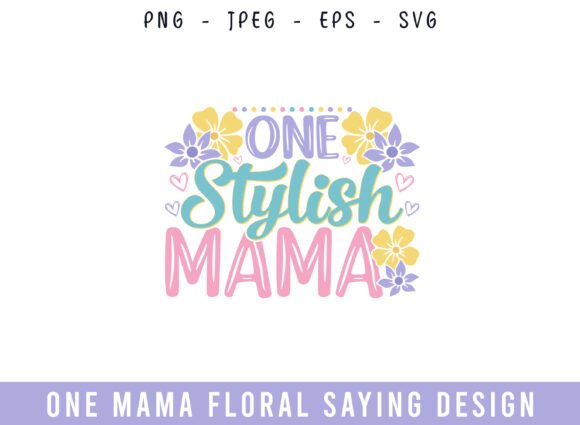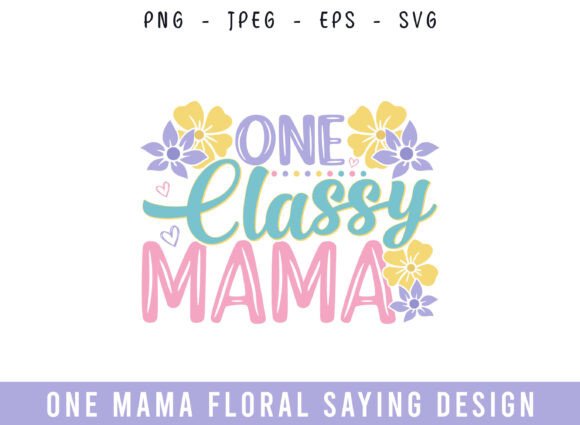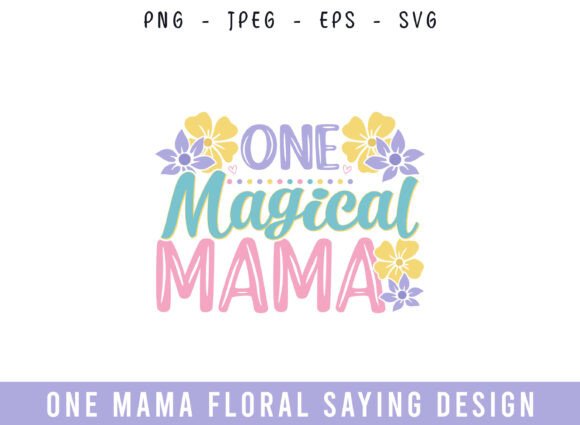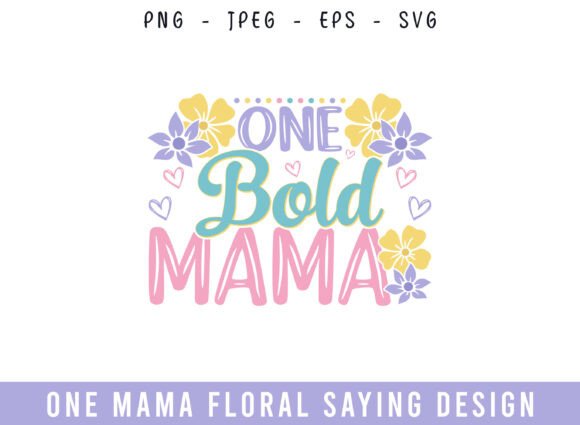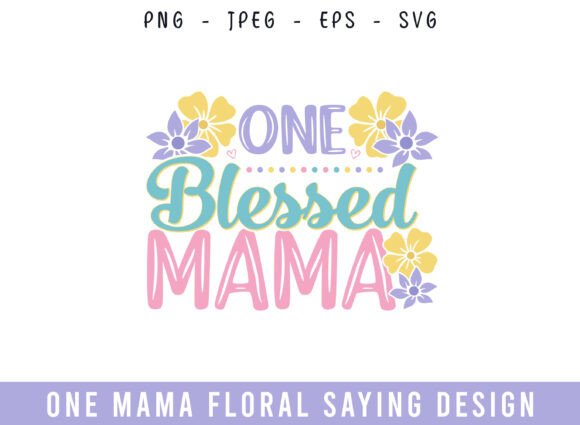
One Blessed Mama Floral Saying Design
Opening a design file for the first time always feels a little like unwrapping a new fabric bolt—you get an immediate sense of its weight, its personality, and whether it will actually work in the real world. The One Blessed Mama Floral Saying Design landed in my review queue and, honestly, my first thought was how naturally it would settle into a whole range of cozy, heartfelt embroidery projects. There’s a softness in the way the lettering curves, a gentle sprawl of floral elements that feels less like a rigid graphic and more like a hand-drawn sentiment. It’s the kind of design that instantly suggests a warm mug of tea, a quiet morning, and the love that goes into making something by hand.
As a designer who spends more time staring at stitch-outs than at screen previews, I’m always looking for that balance between visual charm and practical stitchability. Vector-based artwork like this—proudly described as made with 100 vector shapes and fully resizable—gives you a crisp starting point. But the real test is how those shapes translate when they’re broken down into thread paths, underlay stitches, and the subtle tension of fabric and stabilizer. What I found here is a composition that feels thoughtful without being overly fussy. The floral clusters frame the saying without choking it, and the typography, while decorative, keeps enough breathing room to stay legible at smaller sizes—a critical detail I’ll return to later.
First Impressions: A Gentle, Welcoming Vibe
There’s a visual humility to this design that I genuinely appreciate. It doesn’t scream for attention, yet it holds your gaze. The floral elements are organic, not stiff, and the words “One Blessed Mama” carry a gentle, affirming energy. It’s the kind of artwork that would feel right at home on a baby shower gift, a nursing cover, a kitchen towel, or a well-loved sweatshirt. The mood is nurturing, almost nostalgic, and I can already picture it stitched in soft pastels on a cream background or in bold, warm tones on a dark apron.
One thing that immediately stood out is the designer’s note about easy color change for dark or white t-shirts or mugs. That’s not just a convenience—it’s a practical necessity for embroidery. When you’re digitizing a design like this, you’ll often need to tweak thread colors to contrast with the fabric base. Having a vector original that’s built with that flexibility in mind means you’re not fighting the artwork later. It’s a small detail that speaks to a working knowledge of how crafters and small shop owners actually use these files.
Real-World Test: Planning a Custom Embroidered Tote
Let me walk you through a real scenario. A client asked me to create a personalized Mother’s Day tote bag—something she could gift to her sister, a new mom who’s been through a tough year. The tote is a sturdy 10 oz cotton canvas, natural off-white, and I wanted a design that felt both modern and timeless. The One Blessed Mama Floral Saying Design immediately came to mind. I imagined the saying placed prominently on the front pocket, flanked by those soft petals, and stitched in a thread palette that echoed the recipient’s favorite garden colors.
Before committing to the final embroidery, I pulled the SVG into my digitizing software and began assessing the structure. Because it’s made entirely of vector shapes, I could cleanly separate the lettering from the floral elements, assign different stitch types, and adjust underlay settings without rebuilding messy outlines. I resized the whole design to fit a 5x7 hoop, checked the smallest flower details, and ran a test stitch-out on a scrap of the canvas with a medium-weight cutaway stabilizer. The result? The satin-stitched lettering held its curves beautifully, and the floral fill stitches—though I simplified them slightly for fabric texture—kept that organic, airy feel. The design’s built-in balance meant I didn’t have to spend hours tweaking pull compensation.
Where the Design Naturally Shines
After testing, a few product categories immediately stood out as perfect matches for this artwork:
- Custom apparel: crewneck sweatshirts, relaxed-fit tees, and hoodies. The design’s softness complements casual wear without feeling like a harsh logo.
- Tote bags and canvas pouches: the saying feels personal and giftable, and the floral frame adds a boutique-quality finish.
- Baby items: burp cloths, bibs, and tiny blankets. When scaled down appropriately, the design remains readable and tender.
- Aprons and kitchen towels: the “blessed mama” theme naturally fits the heart of the home, and the floral accents look lovely on linen or cotton blends.
- Pillow covers and nursery decor: the gentle lettering and blooms work beautifully as a decorative accent that doesn’t overwhelm a room.
- Patches and caps: if you plan to embroider on a curved surface like a cap, you’ll need to adjust the layout slightly, but the design’s modular vector shapes make that easier than a single flattened image.
In a small business context, this design offers a lot of versatility. You can use it across multiple product types without it feeling repetitive, which is a huge plus for Etsy sellers, craft fair vendors, and boutique branding. The emotional resonance of the phrase “blessed mama” is broad enough to appeal to mothers, grandmothers, and gift-givers alike, yet specific enough to feel intentional.
Watchpoints for Embroidery Success
No design is perfect for every situation, and there are a few places where the One Blessed Mama Floral Saying Design requires a careful hand. The first is tiny lettering. The saying itself is moderately sized, but if you try to shrink the whole design below about 3 inches wide, the script-like details in the flowers and the thinner strokes of some letters can close up or lose definition. I’d recommend keeping the design at least 4 inches wide for embroidery, and always test on the exact fabric you plan to use.
Dark fabrics present another challenge common to many floral designs. The soft, light-filled look that works so well on a white or cream background can get muddy on black or navy if you don’t adjust thread colors. The original file’s note about easy color changes is a lifesaver here. I’d typically swap delicate pastel tones for brighter, more saturated versions—or even use a metallic thread for a subtle pop—so the design doesn’t disappear into the fabric.
Stretchy fabrics like performance tees or thin ribbed knits will need extra stabilizer and possibly a topping layer to keep those fine petal details from sinking. And if you’re embroidering on highly textured surfaces like a waffle-weave towel, build in a slightly higher stitch density for the lettering so it remains crisp. The floral elements, being more organic, are more forgiving on texture, but the words need to be sharp.
How It Boosts Product Value and Customer Appeal
When I think about the finished product, the One Blessed Mama Floral Saying Design adds an emotional layer that goes beyond decoration. A handmade item with this design feels like a hug—it’s personal, warm, and immediately recognizable as something made with care. That emotional connection is what drives customer reviews, repeat sales, and word-of-mouth referrals. In a sea of generic “mom” designs, the floral framing and the specific word “blessed” elevate the piece into something that feels more curated and less mass-produced.
From a brand consistency standpoint, this design works well if your shop aesthetic leans toward soft, natural, family-centered products. The visual language is cohesive, and the 100 vector shapes mean you can easily extract a single flower, recolor the entire set, or create a matching collection of designs for a cohesive product line. The ability to print on mugs or use it as a printable mockup also opens up hybrid product bundles—think an embroidered tote with a matching mug sold as a set. That kind of cross-product thinking can significantly boost average order value without requiring a completely new design asset.
Practical Notes Before You Stitch
Here are the hands-on steps I’d recommend to anyone planning to use the One Blessed Mama Floral Saying Design in a real embroidery project:
- Test on scrap fabric first. Use the same material and stabilizer you plan for the final product. Don’t skip this just because the vector preview looks perfect.
- Review thread color contrast. If you’re stitching on a dark t-shirt or tote, lighten the floral threads or add a subtle outline to keep the design legible. The file’s easy color-change feature is your friend here.
- Check your hoop size. The design is resizable, but embroidery digitizing needs to maintain proper stitch density. For a 5x7 hoop, aim for a design width of about 4.5 inches to leave room for the hoop’s edge and any alignment tweaks.
- Inspect small details. Zoom in on the flower centers and the thinnest parts of the lettering. If you’re digitizing manually, adjust the stitch angle and add a run stitch underlay to keep those areas from pulling.
- Test in black and white. A quick grayscale mockup can reveal whether the tonal values will hold up across different fabric colors. The design’s original 100-color palette is a great starting point, but the final embroidery will live in thread, not pixels.
- Use proper stabilizer. For apparel, a medium-weight cutaway is usually safe. For towels or stretchy items, add a water-soluble topping.
- Confirm licensing. Before selling finished items or including the design in a digital product bundle, always check the license terms. The fact that the design is listed under Crafts and Graphics suggests it’s intended for making physical items, but don’t assume—reach out to the creator if you’re unsure.
One more note: the file is described as ready to print, which is fantastic for mockups and vinyl projects, but embroidery is a different beast. You’ll need to convert it into a machine embroidery file yourself or hire a digitizer. The good news is that the clean vector construction makes that conversion far smoother than raster artwork, and the 100 vector shapes give you the flexibility to assign stitch types with precision.
Final Thoughts from the Embroidery Bench
The One Blessed Mama Floral Saying Design isn’t a trend-chasing graphic; it’s a quiet, reliable design that earns its place in a maker’s toolkit. It has the emotional warmth that makes a handmade gift feel special, the structural integrity to survive a digitizing session, and the versatility to stretch across a whole product line. In my own work, it’s the kind of design I’d keep in a “go-to” folder—ready for that last-minute custom order, that new baby collection, or that heartfelt thank-you gift that needs to look like it took hours but didn’t actually break my schedule.
Treat it like a trusted recipe: follow the instructions, test your settings, and don’t be afraid to add your own creative twist. Whether you’re stitching it on a cozy hoodie, a linen apron, or a tiny newborn hat, the design holds its own. And that’s exactly what you want from a Mom Life Saying that’s meant to be seen, touched, and treasured in fabric and thread.