Heart GrandKid Name Grandma Mom: A Designer's Eye
When I first open the file for Heart GrandKid Name Grandma Mom, I’m not just looking at a vector shape. I’m already picturing how it will translate into thread, how the curves will soften under a satin stitch, and whether a grandmother’s eyes will well up when she unwraps the finished piece. This SVG collection carries a promise: a heartfelt connection between a grandchild and a grandmother, rendered in a clean, customizable heart motif. But as any embroidery designer or small shop owner knows, the gap between a digital graphic and a stitched-out product can be wide. My job here is to bridge that gap with real-world judgment, without the fluff.
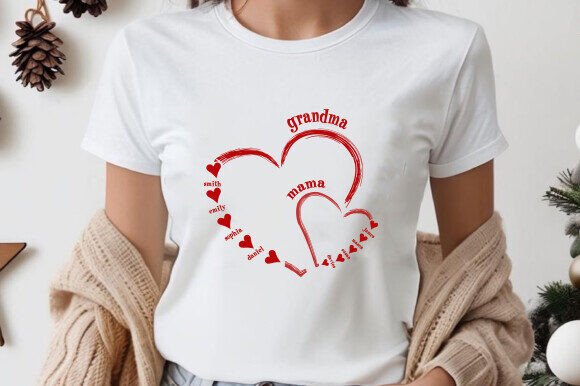
The design itself sets a warm, tender mood. The heart is the anchor—universal, timeless, and emotionally charged. Paired with the customizable names, it becomes a keepsake. The typography area feels intentional, leaving enough breathing room for personalization without overwhelming the core shape. What I appreciate most is the versatility: the SVG isn’t locked into a single style. You can interpret it as a minimalist outline, a filled applique, or a hybrid with decorative flourishes. This flexibility is gold for crafters who juggle multiple product lines, from baby onesies to kitchen towels.
What the SVG Brings to the Embroidery Table
Before a needle ever drops, every designer has to ask: will this graphic hold up as an embroidery file? Heart GrandKid Name Grandma Mom starts with a strong foundation. The heart shape is well-proportioned, avoiding awkward spikes or overly thin connections that could turn into stitch headaches. The layout naturally guides the eye from the central heart to the personalized names, which is exactly what you want for a personalized gift. The visual personality is gentle but confident—it doesn’t scream for attention, but it holds space beautifully. For an Etsy seller or boutique owner, that means the design can stand alone on a tote bag without competing with other elements.
However, an SVG is still a starting point. When you bring it into embroidery software, you’ll need to make deliberate choices about stitch types. The heart border could work as a crisp satin stitch on a flat surface, but on a thick towel, it might sink if you don’t plan for a fill stitch underlay. The lettering area is a critical zone: if the names are too tiny, a running stitch might look spidery; if too bold, they could crowd the heart. I always test the word “Grandma” in a mockup at the intended size to see if the counters stay open. A quick trick is to print the design at actual size on paper and lay it over a scrap of the target fabric. You’ll know instantly if the stitch density needs adjustment.
A Real Project: Stitching Love onto a Tote Bag
Let me walk you through a recent project where Heart GrandKid Name Grandma Mom became the hero. A client wanted a custom embroidered tote bag for her mother, who was becoming a grandmother for the first time. The brief: something elegant enough for a farmers’ market run but sentimental enough to become a holiday keepsake. I chose a natural cotton canvas tote and placed the design off-center, slightly toward the upper left. The SVG was imported into my digitizing software, and I converted the heart outline into a dense satin stitch with a subtle scalloped edge, while the names were digitized as a small, refined font with a satin finish.
During the test stitch, I learned three things. First, the heart’s upper lobes needed a slight angle tweak to avoid thread breaks on the curved edges. Second, a medium-weight cutaway stabilizer was non-negotiable to prevent the canvas from puckering under the stitch density. Third, the thread color—a soft rose gold—popped against the natural cotton but would have disappeared on a light beige. The finished tote bag felt like a hug in thread form. The client’s mother cried. That’s when you know the design works beyond the technical specs: it holds emotional weight that customers will pay for.
Products That Let This Design Sing
Heart GrandKid Name Grandma Mom is not a one-trick pony. Its strength lies in its adaptability. Here’s where I’ve seen it perform beautifully, or where I’d confidently place it in a craft business inventory:
- Custom apparel: A unisex crewneck sweatshirt with the design placed over the chest. The heart becomes a subtle statement piece. For a grandchild’s name, use a thread color that matches the shirt’s tone for a tone-on-tone look, or go bold with metallic thread for a holiday vibe.
- Baby embroidery: On a soft, organic cotton onesie, the design works best as a reduced-size applique. Use a lightweight fusible stabilizer and a low-stitch-count satin edge to keep the fabric soft against a newborn’s skin.
- Kitchen textiles: A set of linen tea towels with the heart centered at the bottom fold. This is where the design’s simplicity shines—it elevates a everyday item into a handmade product that feels boutique-worthy.
- Tote bags and pillows: As mentioned, these are canvas-approved. I’ve also seen it on a throw pillow cover, where the heart becomes a subtle focal point on a couch. The larger surface area allows for bolder thread choices and even a decorative border.
- Holiday gifts: Think Christmas ornaments, Valentine’s Day keepsakes, or Mother’s Day presents. The heart motif is seasonless, but the personalization makes it gift-ready year-round.
For digital product sellers and printable mockup creators, Heart GrandKid Name Grandma Mom is a smart addition to a bundle. It previews well in flat lays and can be mocked up on a variety of products to show potential buyers what’s possible. I’ve found that design assets like this attract customers who are searching for that perfect grandmother-grandchild gift, and the SVG format allows them to try it in their own software before committing to a stitch-out.
Where Caution Comes Into the Design
No design is without its fragile spots, and I’d be remiss if I didn’t flag them. The heart shape, while elegant, can become problematic on certain hoop sizes. If you try to cram this into a 4x4 inch space, the lettering might shrink to an unreadable size. I recommend a minimum of 5x7 inches for the heart alone, and larger if you’re adding long names. Small hoop sizes are a common pitfall for beginners who want to stitch quickly on a cap or a baby bib—but here, the details will blur.
Fabric texture is another wildcard. On a thick, looped terrycloth, the satin stitches can sink in, making the heart look jagged. A solution is to use a water-soluble topper over the fabric, but that adds time and complexity. Stretchy fabric like a cotton-spandex blend requires a stable backing and a light touch with the stitch density; too many stitches, and the design will ripple. Dark fabric also demands a high-contrast thread, or the heart might disappear. I once tested this on a navy apron, and a pale pink thread looked ghostly until I switched to a bright coral.
Curved surfaces like caps or hats are tricky for the heart’s symmetrical balance. The design can warp if the hat isn’t hooped absolutely flat. And those decorative accents—if you add a filigree or a secondary pattern inside the heart—can create dense stitch areas that cause thread breaks. Always run a stitch-out at full speed and watch for needle deflection.
The Visual Equation: Clarity, Value, and Customer Trust
When a customer picks up a product featuring Heart GrandKid Name Grandma Mom, they’re not just buying a mug or a sticker. They’re buying a story. The visual appeal of this design lies in its clean, uncluttered silhouette. It doesn’t need to shout; it whispers “family” and “love” in a way that feels genuine. That’s what builds customer trust. If the stitching is crisp, the thread is vibrant, and the placement is thoughtful, the finished product will command a higher price point. A poorly stitched version, on the other hand, will erode trust in a heartbeat.
For brand consistency, this design fits seamlessly into a line of personalized gifts. It pairs well with other heart-themed items, but it’s distinct enough to stand alone. The giftability factor is through the roof: a grandmother receiving a pillow with her grandchild’s name inside a heart is going to display it proudly. That emotional connection translates to repeat buyers and word-of-mouth referrals. In my small shop product line, I’ve noticed that items with this design get shared on social media more often, which is free marketing you can’t ignore.
A Designer’s Pre-Flight Checklist
Before you stitch Heart GrandKid Name Grandma Mom onto a client’s garment or a batch of merchandise, run through these practical steps. They’ve saved me from more disasters than I can count.
- Test on scrap fabric first: Always. I keep a stash of the same material I’ll use for the final product. Stitch the heart at full size and check for even tension, thread trims, and edge smoothness.
- Check thread color contrast: Hold the thread spool against the fabric in natural light. What looks good under a lamp can look washed out or muddy in daylight. For Heart GrandKid Name Grandma Mom, I often use a variegated thread for the heart to add depth without extra complexity.
- Review stitch density: If the design has been auto-digitized, it might be too dense. A heart shape with overly tight satin stitches can feel rigid and uncomfortable on a garment. Adjust the spacing so the fabric remains flexible.
- Confirm hoop size: Measure the design’s bounding box in your software. If it’s a multi-hoop project, mark alignment points on the fabric. For custom names, leave extra space in the hoop so the lettering doesn’t get clipped.
- Inspect small details: Zoom in on the lettering nodes. Are the angles smooth? Is the “a” in “Grandma” going to close up? A tiny adjustment here prevents a failed stitch-out later.
- Test in black and white mockups: Convert the design to grayscale on your screen. If the heart shape loses its impact, it might need a bolder outline or a different stitch type. This is especially useful for commercial embroidery where you’re selling to a wide audience.
- Compare light and dark fabric backgrounds: Stitch the design on a light scrap and a dark scrap. The thread color should remain legible. I once had a beautiful gold thread turn invisible on a cream linen; a dark navy thread fixed it instantly.
- Use proper stabilizer: For most apparel, a cutaway stabilizer is your best friend. For delicate fabrics like a baby onesie, a tear-away or wash-away stabilizer keeps the back soft. Don’t skip this step for custom apparel.
- Check licensing before selling: The product description says it’s a CUSTOM design, but always confirm the terms. Can you use it on commercial embroidery products? Are you allowed to sell the digitized embroidery file itself? If that’s unclear, reach out to the creator. Digital product sellers need to be especially careful with design assets like this.
- Verify the file format: Since it’s an SVG, you’ll need to convert it for your machine. Ensure the conversion process doesn’t alter the design’s proportions. If you’re offering it as a digital embroidery file for sale, you’ll need to provide a machine-ready format like DST or PES, which requires clean digitizing and testing.
Heart GrandKid Name Grandma Mom is a reminder that the best embroidery designs aren’t just about technical perfection. They’re about the moments they create. When a grandmother traces her grandchild’s name with her finger, the thread becomes a bridge. As a designer, my job is to make sure that bridge is strong, beautiful, and built to last. If you treat this SVG with the respect it deserves—testing, adjusting, and personalizing with care—you’ll end up with a product that sells itself on sentiment alone.