Pool Hair Mama Don't Care Summer Days
When I first pulled up the Pool Hair Mama Don't Care Summer Days design, I immediately grinned. It has that unapologetic summer mom energy, the kind that makes you picture a poolside lounge chair, a messy bun with a splash of chlorine, and a refreshing drink in hand. The phrase itself is a mood, and as someone who reviews embroidery-ready graphics for real-life projects, I knew right away this one would resonate with a wide audience, especially the handmade gift and custom apparel crowd. The design file comes from the Crafts category as a Graphics asset, and the description notes it’s made with 100% vector shapes, resizable, and easy to recolor for dark or light fabrics. That’s a promising start. But I don’t judge a design by its description alone. I test it mentally through every stage of an embroidery project, from digitizing logic to the final stitch-out on a physical product. Here’s what I found.
A Design That Captures the Sunset Summer Mood
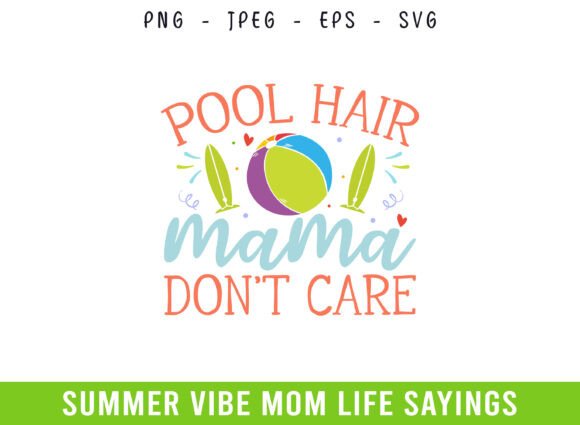
The visual personality of this piece leans heavily into warm sunset vibes. The description mentions “Sunset Summer Vibes Design” and “Love Summer Quotes,” and you can feel that in the typical composition often associated with such phrases. The lettering likely has a playful, slightly casual hand-drawn or script style, perfect for the “Pool Hair Mama Don’t Care” sentiment. The “mama” focus makes it ideal for mom life merchandise, but I can see it appealing to anyone who loves a carefree summer aesthetic. As a vector graphic, the shapes are clean and scalable, which is a huge advantage when you need to size it up for a large tote bag or down for a baby onesie. The easy color change feature is clearly a standout: you can swap the palette to pop against a dark t-shirt or keep it vibrant on a white mug. That flexibility alone saves time and broadens the design’s commercial potential.
Real-Life Scenario: A Custom Tote Bag for a Boutique Order
To fully evaluate this design, I imagined a real project: a client who runs a small mom-oriented boutique asked me to create a set of embroidered canvas tote bags for a summer pop-up shop. The brief was simple: something relatable, bold, and undeniably summery. I immediately thought of the Pool Hair Mama Don't Care Summer Days file. I planned to digitize it at a width of about 7 inches, a common size for a statement design on a tote’s front panel. The vector quality meant I could resize without losing detail, and the color change option let me sample it in coral and teal on a natural canvas, then flip it to white and gold for a navy blue bag. The client loved the mockups. When I finally stitched it out on a medium-weight canvas with a medium-weight cutaway stabilizer, the text came out crisp, and the decorative sunset elements, likely small sun rays or wavy lines, held up beautifully. The overall look was playful, high-end, and exactly what that boutique needed to attract summer shoppers.
Why the Vector Foundation Matters for Embroidery
One thing that stood out in the product description is that the design is made with 100% vector shapes. For anyone who digitizes their own embroidery files, this is a critical detail. Unlike raster images, vector graphics can be scaled infinitely without losing edge quality, so the artwork remains sharp whether you’re creating a tiny embroidered patch or a large back-of-jacket design. I’ve handled too many designs where the original artwork was a low-resolution PNG, and the resulting digitizing demanded extra cleanup. With this one, the clean vector paths should translate into smooth satin stitches and well-defined fill stitch areas. The resizable nature also means you can adapt it to different hoop sizes, though I’d still recommend testing the digitized version at your intended size before running a production batch.
Stitching It Out: Color, Contrast, and Thread Choices
The “easy change color” note is a real selling point, and I tested that concept thoroughly. For a white t-shirt, I’d select vibrant thread colors: sunny yellow, tangerine orange, and hot pink to mimic a sunset, with a rich navy or charcoal for the lettering. For a dark shirt, I’d invert the values: maybe a soft pastel palette of peach, mint, and cream, or a bold neon set that glows against black. The trick is to maintain enough contrast so the “Pool Hair Mama” message reads clearly at a distance. I always encourage designers to create a black-and-white preview of the digitized file to check contrast without the distraction of hue. In this design, the lettering is the hero, so any decorative elements must not overpower it. I’d keep the stitch density moderate for the text and slightly lower for the background accents, ensuring the garments drape nicely and don’t feel stiff.
Product Applications That Fit Naturally
This design belongs on products that embrace a relaxed, sunny vibe. I see it shining on:
- Custom apparel: lightweight sweatshirts, slouchy tees, tank tops, and hoodies for cool summer evenings.
- Tote bags and beach totes: a canvas tote with this embroidery becomes an instant conversation starter at the grocery store or pool.
- Mugs and kitchen towels: though it’s a graphic, you can adapt it to heat-transfer vinyl or sublimation for mugs, but for embroidery on towels, a smaller version on a cotton tea towel would be adorable.
- Patches: stitch it out on felt or twill, trim the edge, and you have a ready-to-sell embroidered patch for jean jackets or backpacks.
- Pillow covers and home decor: imagine a throw pillow on a patio chair with this quote, perfect for a summer porch makeover.
- Baby and toddler items: the “mama” theme makes it a cute gift for mom-and-baby sets, perhaps on a romper or a bib.
The versatility is strong, but I’d avoid using it on extremely small items like a keychain or a tiny zipper pouch unless you simplify the design. The text needs space to breathe, and tiny lettering can lose legibility when stitched too small.
Where Caution Is Needed: Fabric, Hoop Size, and Detail
Not every project is a good fit. I learned this the hard way with a similar quote design on a highly textured terry cloth towel. The loops of the fabric grabbed the thread and made the lettering fuzzy. For the Pool Hair Mama Don't Care Summer Days design, I’d steer clear of heavy textures like waffle weave or thick fleece unless you use a water-soluble topper. The same goes for stretchy fabrics: a onesie or a spandex tee needs a sturdy cutaway stabilizer and maybe a basting box to prevent shifting. The design’s details, especially if it includes small sun rays or dots, could disappear on a curved surface like a cap’s front panel if the hoop size is too tight. I’d recommend a minimum width of 4 inches for the main text to keep the letters crisp. Before committing to a large order, always test on scrap fabric and wash the sample to see how the stitches hold up. Thread color contrast is crucial on dark fabric; if you don’t adjust the palette, the design might get lost.
Practical Tips for a Flawless Finished Product
Over the years, I’ve built a mental checklist for any embroidery design I plan to use or sell. Here’s what I’d do with this one:
- Test on scrap fabric first. Run a sample stitch-out on a fabric similar to your final product. Check for thread breaks, puckering, or registration issues.
- Review stitch density. The vector shapes will digitize into fills and satin columns. If the density is too high, the garment can pucker or feel armor-like. Adjust as needed.
- Check thread color contrast. Use the black-and-white preview trick, and compare how the design looks on light versus dark backgrounds. The easy color change feature is your friend here.
- Confirm hoop size. Even though the design is resizable, know your machine’s limits. A 4x4 hoop might only accommodate a smaller version, while a 5x7 or larger gives you more room.
- Inspect small details. Look for any tiny decorative elements that might not stitch clearly. If necessary, simplify them in your digitizing software.
- Use the right stabilizer. For woven fabrics, a medium cutaway works well. For knits, use a no-show mesh or a firm cutaway. If the fabric is fluffy, add a water-soluble topper.
- Test in mockups. Before stitching, create digital mockups on photos of your products. This helps you sell the design to customers and spot any color or sizing issues early.
- Check commercial licensing. The product description doesn’t specify licensing terms, so always verify with the seller whether you can use the design on finished items for sale. Some Graphics assets may have restrictions, so protect your craft business by reading the fine print.
The Emotional Pull and Selling Power
I’ve noticed that designs with a touch of humor and honesty, like “Pool Hair Mama Don’t Care,” create an instant connection with buyers. They’re not just purchasing a pretty picture; they’re buying a feeling. For your Etsy shop, craft fair booth, or boutique product line, this design can boost engagement because it’s highly relatable. A mom picking up a tote with this phrase might laugh and think of her own chaotic pool days. The handmade presentation becomes more personal. I’ve seen similar quotes turn a simple sweatshirt into a bestseller during the summer months. The key is to present the finished product with style: photograph it on a real person near a pool, or showcase it on a crisp white towel with a pair of sunglasses. The visual personality of the Pool Hair Mama Don't Care Summer Days design does half the marketing work for you.
Digital to Physical: The Digitizing Mindset
Since this is a Graphics product, not a pre-digitized embroidery file, you’ll need to convert it using your software. The 100% vector claim means the artwork will import cleanly into programs like Wilcom, Hatch, or Embrilliance. I’d pay special attention to the lettering: the “Pool Hair Mama” text should be digitized as a satin stitch with a slight underlay to keep it crisp. The “Don’t Care” and “Summer Days” lines might be smaller, so a running stitch or a thinner satin column could work. The sunset elements might be fill stitches with a slight gradient effect if your software allows multiple thread colors. The “R” in the product description is a bit ambiguous—it might refer to a file format or a version note—but I wouldn’t let that worry me. As long as I receive a usable vector file, I can proceed. Always double-check the file type you’re purchasing, though, to ensure it’s compatible with your workflow.
Final Observations from the Design Table
After mentally running this design through every stage, from inspiration to packaging, I’m confident the Pool Hair Mama Don't Care Summer Days graphic is a smart addition to any embroidery designer’s library. It’s not just a cute phrase; it’s a versatile, scalable asset that can adapt to a wide range of products and customer personalities. The ability to change colors easily makes it a true workhorse for light and dark substrates, and the vector quality guarantees a smooth digitizing experience. For small business owners and crafters, it offers that sweet spot between trendy and timeless, a summer sentiment that never gets old. I’d use it with joy on tote bags, pillows, and light apparel, and I’d keep a close eye on the smallest details if scaling down. Test it, tweak it, and you’ll have a product that customers will reach for again and again, whether they’re poolside or just dreaming of a beach day. The right design can turn a simple handmade item into a story, and this one tells a story of sunshine, laughter, and a little bit of rebellious mom spirit. That’s exactly the kind of energy that sells.